How Preschool Supports Children’s Learning, Confidence and Independence
Good preschool doesn’t rush children towards schoolwork. It gives them space to play with purpose and manage small parts of their day alone. That balance builds real learning and quiet confidence over time.
Learning starts with play, not pressure
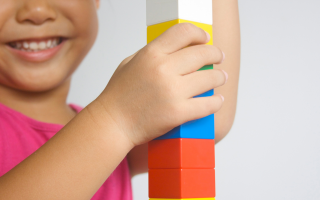
We learn a lot about a preschool by looking at how reading and maths appear in play. You won’t see rows of worksheets in a strong room. You’ll see children cooking with measuring cups, digging in the sandpit while talking about full and empty, and stretching their vocabulary through stories. Block play brings in counting and shape talk naturally.
This is play-based learning in practice. Children hear new words while doing things with their hands. They test ideas about number when they pour and share, while songs and rhymes help sounds and patterns stick. Teachers join in to narrate and ask open questions. That back-and-forth keeps language alive rather than turning it into a drill.
Harvard University’s Center on the Developing Child reports that more than 1 million new neural connections are formed every second in the first few years of life (Harvard University Center on the Developing Child). That pace is hard to picture. It means daily talk and hands-on play carry weight.
Te Whariki, the bicultural early childhood curriculum, guides this teaching towards holistic growth. It treats cognitive and physical development as connected with emotional and social growth. A cooking activity involves maths, but also turn-taking, patience and pride in a shared result. A story builds literacy while encouraging children to listen, wonder and link ideas to home life.
Executive function gets a workout too. When children hold a recipe step in mind while they stir, they use working memory and cognitive flexibility. If the dough is too sticky, they pause and try another way. Teachers keep the challenge manageable, repeating games with slight changes so memory and focus stretch without overload.
Routines give the day its shape
Children settle when they know what happens next. Mat times, tidy-up songs, shared meals and outdoor play give the day a rhythm they can trust. They don’t have to guess, so they can relax into play because the frame holds.
That predictability supports self-regulation. A child who knows tidy-up music means pack away can start shifting gears on cue. Another who knows kai time follows hand washing can move through the steps without a reminder. These shifts look simple. They still require impulse control and attention.
Routines also hand over ownership. Jobs rotate: someone rings the bell for mat time, waters the plants or helps set out cups. Teachers keep instructions short and visual so children can follow them alone. Mistakes are expected. Spilled water gets wiped and a forgotten bag gets fetched.
We see calmer afternoons when mornings follow the same pattern. Children argue less about what comes next and save more energy for play and friends. Parents often notice the same effect at home once bedtime and morning steps become steady. There is comfort in knowing the order of things.
That pause matters.
There is still room for choice inside the structure. A child can pick puzzles or painting after mat time, or decide to finish a block tower before lunch. Choice within limits teaches a sense of time while keeping the day from feeling rigid.
Teachers stretch learning at just the right point
Good teaching starts with close observation, followed by a gentle nudge. A teacher notices what a child returns to each day, then adds one small challenge just beyond what the child can do alone. This is scaffolding in the zone of proximal development. Support increases for a while, then drops back as skill grows.
Picture a child who loves drawing circles. The teacher sits nearby, draws alongside and adds eyes and legs to turn circles into people. The child copies, then invents. Next week, the teacher leaves out paper and pens before stepping back. The child continues alone, with learning moving forward without pressure.
Qualified teachers make this look easy. They know when to wait and when to step in, and they ask questions without one correct answer. They document what they see and share it with families so home and preschool pull in the same direction. Low group sizes help each child get noticed, so no one stays invisible in the corner.
When visiting a Preschool Henderson families are considering, it helps to watch how teachers speak with children and how the room encourages exploration. Good scaffolding can be heard in a teacher’s tone and seen in materials set at child height, ready for children to reach on their own.
Confidence grows alongside other children
Preschool is often the first place where a child spends long stretches with peers. Siblings and cousins don’t create the same mix as a group of twenty different temperaments. Children have to state their needs, hear no and try again.
They practise empathy, conflict resolution, negotiation and turn-taking through real friction. Two children want the red truck. One suggests a timer, while the other asks for another minute. A teacher stays close and coaches the words as they test a deal. It might fail, so they try again. That cycle builds social-emotional skill faster than a lesson about sharing.
Language for feelings grows here. Teachers name what they see in plain terms: you look frustrated, you seem proud, do you need space? Children borrow those phrases and gradually use them without prompts. They ask for help before tears take over and tell a friend what hurt.
Age-appropriate risk feeds a growth mindset. Climbing frames and speaking at mat time ask children to have a go in front of others. Teachers praise effort clearly: you kept trying, climbed one bar higher or told the story even though your voice shook. Children learn that effort leads somewhere and a wobble isn’t the end.
We don’t rush shy children onto a stage. We make room for small brave acts, such as a wave at the gate or a song sung from a teacher’s lap. Small wins stack up. Confidence looks quiet at first, then it holds.
What courage looks like at mat time
Mat time can feel big for a small child. All eyes turn and the room goes quiet. Teachers lower the stakes by letting children pass, or show rather than tell. A child might hold up a leaf instead of giving a speech. The group claps. Next time, that child may add one word, then a sentence. Progress comes in safe steps.
Saying goodbye builds lasting steadiness
Separation is a milestone, not simply a morning routine. Many children feel wobbly at drop-off for a while. That’s normal because they love their parents and the new room still feels strange. How preschools handle those first weeks shapes trust.
Attachment ideas help here. A secure base at home, combined with a warm teacher bond, lets a child explore. Teachers greet each child by name and learn the small details that matter, including a favourite cup, puzzle or song from home. They stay physically close in the early days. Rather than peeling a crying child from a parent and disappearing, they invite the parent to stay briefly and leave with a clear plan for return.
Goodbyes get shorter with practice, and a consistent ritual helps: hug, wave at the window, then play. After the door closes, teachers offer a purposeful activity such as watering the garden, feeding the fish or starting dough for baking. Children learn that sad feelings pass and trusted adults return.
Self-care rituals calm nerves too. Deep breaths and quiet corners give children tools they can use alone. A teacher might breathe with a child three times before rejoining play. A cushion behind a shelf can be a resting place rather than a punishment spot. Children begin asking for a break before they boil over, a skill they will use for years.
Parent-teacher partnership keeps this steady. Short chats at pick-up, along with notes about sleep and mood, help teachers read the day. When home and preschool share what works, children don’t have to adjust to two different sets of rules. They feel supported by both sides.
Independence grows through small daily jobs
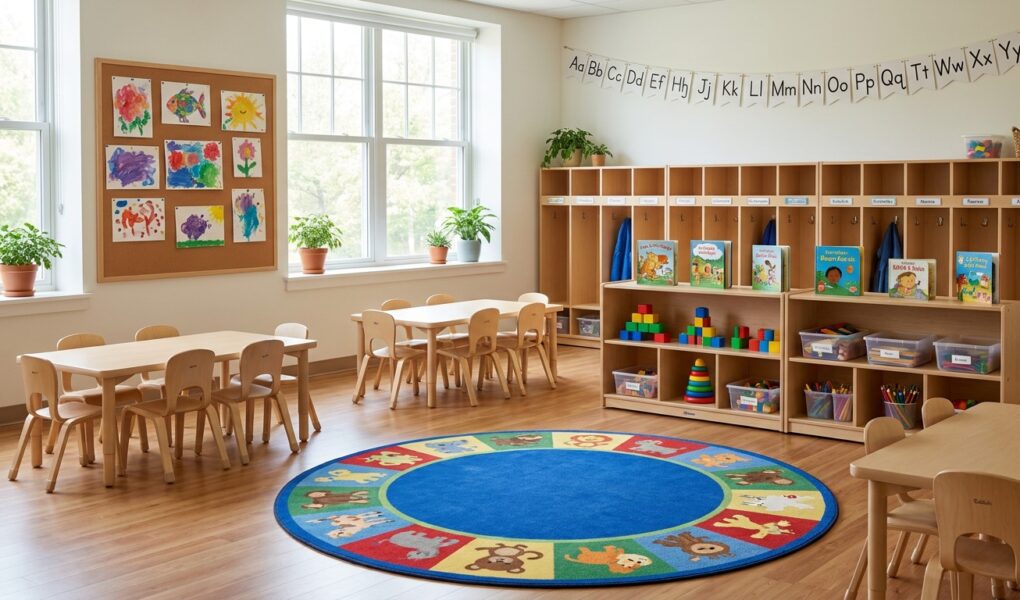
Independence comes from handling coats, cups and bags alone many times, not from big speeches about growing up. Preschool teachers plan for this. Hooks sit low, jugs are small and light, and plates are stacked within reach.
Watch a lunch routine. Children wash their hands, find seats, pour water and pass fruit. They open lunch boxes and clear scraps when finished. Other jobs include putting on coats and packing bags. Each task takes a minute, and each one says: you can do this.
Teachers resist the urge to jump in. It is faster to zip a jacket and tidier to pour without spills, but they wait. They demonstrate a grip once, then let small fingers try. They smile at the effort even when shoes end up on the wrong feet. Speed isn’t the goal. Ownership is.
Choice builds independence too. Children choose where to play, who to join and how long to stay. They learn to live with the result. If the painting corner is full, they find another spot or wait. If rain cancels outdoor time, they help set up indoor games. Flexibility grows when adults remain calm about change.
We keep expectations matched to age. A younger child might carry one cup, while an older child helps a newcomer find the toilets. Both feel useful and seen. Independence wrapped in belonging lasts longer than independence pushed through praise alone.
How teachers step back without checking out
Stepping back is active, not passive. Teachers scan the room while allowing a child to struggle briefly, moving closer if frustration rises. They offer a hint instead of a fix: try the other sleeve first, or tip the jug slowly. That balance keeps children safe while they learn to manage alone.
Strong bodies and school-ready minds
Thought lives in the body at this age. Children think while they climb, dig, cut and pour. Well-equipped rooms support that connection through construction areas, art stations, outdoor play and sandpit work. Scissors build hand strength for later writing. Climbing develops balance and judgement about height and grip, while digging and lifting build stamina for long days.
Fine motor play deserves daily time. Drawing, threading beads and rolling dough all demand control. Teachers provide tools suited to small hands, including thick crayons before thin pencils, short scissors that turn easily and soft playdough. Children repeat movements until their hands learn the path. No one times them. Mastery comes through repetition that feels like fun.
Gross motor play needs space and clear limits. Run here, climb there, keep bikes on the track and balls past the line. Children test speed and strength within boundaries they understand. They fall, get up and learn to check a landing before leaping. Teachers stay near tricky spots without hovering over every move.
All of this smooths the move to primary school. Children who can dress, pack, sit for a story and ask for help often settle faster. They follow group instructions, manage toilets and lunches, and join play without constant adult help. They still need support, as every new entrant does, but the basics are in place so teachers can teach.
Look for signs of readiness in everyday moments rather than test scores. Notice whether your child can listen during a short story and retell one part, wait for a turn or accept a change in plans. Can your child name a feeling and choose a calming step? Those habits carry more weight than letter drills at this stage.
A preschool that connects play with routines and warm guidance gives children a steady launch. Learning feels joyful rather than forced. Confidence is earned through attempts and fixes, while independence becomes normal because the room expects it. Families notice the difference when drop-offs become easier and stories from the day grow longer.